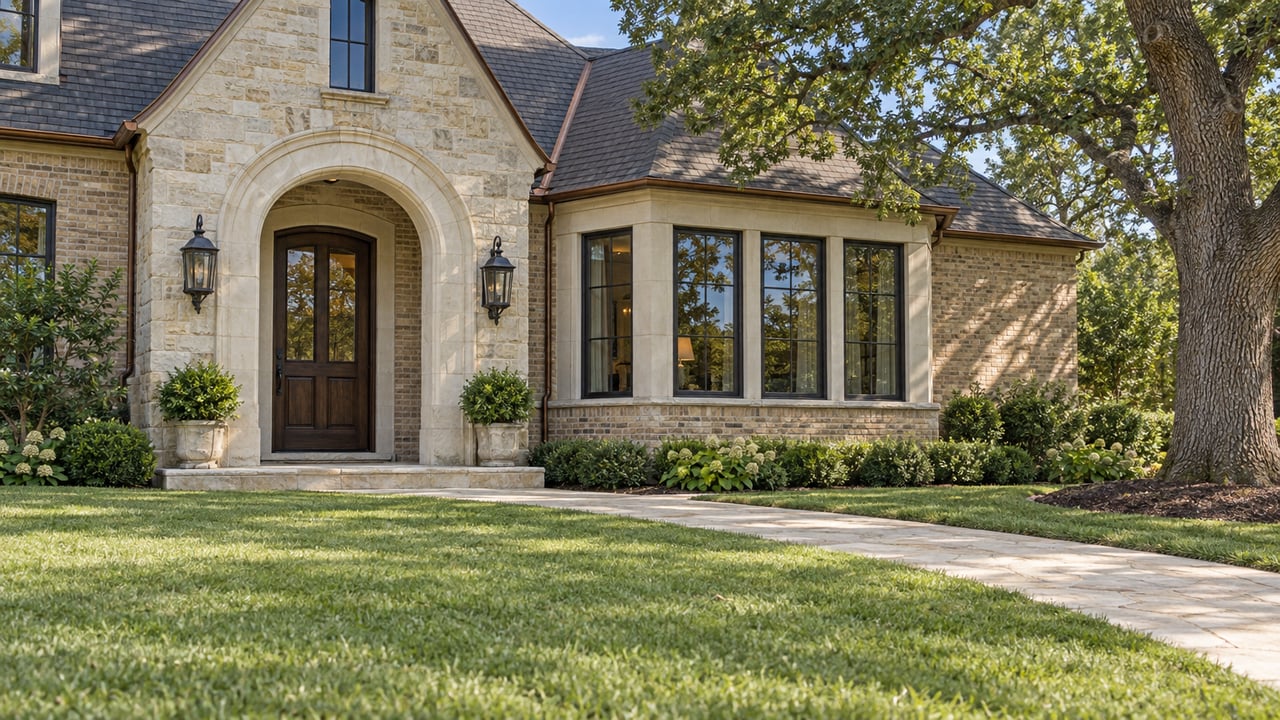

In Panther Creek, the fine print on a closing statement carries a number most Collin County transactions never touch: a public improvement district assessment of $2,497.82 per lot, or $3,014.59 depending on which section of the subdivision the property sits in, according to the City of Frisco. The City of Frisco created these PIDs to speed up park construction and neighborhood entrances, and every lot in the affected sections was assessed an equal share of the bond that paid for it. Some owners paid the full amount at closing. Others are still paying $241.72 a year, billed by the city, for a total of twenty years.
None of that shows up in a listing price. Two homes can sit on the same street, carry the same square footage, and list at the same number, and one of them can owe an obligation the other does not. That gap is the thing worth understanding before an offer goes in or a listing goes live, because Fannie Mae's Selling Guide requires lenders to include monthly housing expenses in what a buyer qualifies for.
What a PID Actually Buys
A Public Improvement District is not a tax in the traditional sense. It is a repayment plan. The city (or a developer, later handed to a homeowners association) borrows money to build something specific, streetscapes, entryway landscaping, a park, and then divides that debt evenly across every lot that benefits. Panther Creek's PID paid for two city parks, Bob White and Mourning Dove, along with enhanced entrances and green space, financed through the city's bond process and repaid by homeowners either in a lump sum or in fixed annual installments over twenty years.
Because the assessment is fixed at the time it's created, it doesn't move with your home's appraised value the way property taxes do. A homeowner who bought early and paid off the assessment in full owes nothing further. A homeowner two doors down who financed it over twenty years is still paying an annual bill that has nothing to do with market appreciation. The city has been working through the process of retiring this particular PID debt as the underlying bonds get paid down, but whether a given lot's obligation is still active or already closed out isn't something a listing price will tell you. That's a question for the payoff figure, not the sale price.
The MUD Difference
Frisco was built almost entirely as master-planned development. Phillips Creek Ranch, Newman Village, Starwood, Stonebriar, and Lone Star Ranch all operate under HOA governance, and several were financed in part through PIDs. But a lot of the newer construction in and around Frisco carries a different mechanism entirely: a Municipal Utility District tax.
A MUD isn't a one-time assessment. It's an ongoing property tax line item that funds water, wastewater, and drainage infrastructure, adopted annually by the district's board and expressed as a rate per $100 of appraised value. Unlike a PID assessment, which is fixed regardless of what your home is later worth, a MUD tax scales with your appraisal. It shows up as its own line on the Collin County tax statement, separate from city, county, and school district taxes, and it can add to a home's carrying cost depending on the district and the property's value.
That's the gap a portal median price can't show. A $700,000 listing in a MUD district and a $700,000 listing outside one are not the same purchase, even though the sale price on paper is identical.
| PID (Panther Creek example) | MUD (new-construction districts) | |
|---|---|---|
| Structure | Fixed assessment set at creation | Annual tax rate, recalculated yearly |
| Moves with appraised value | No | Yes |
| Typical cost | $2,497.82 or $3,014.59 total, payable in full or over 20 years | Varies by district and property value |
| Where it appears | Sometimes billed by the HOA, sometimes by the city directly | Separate line item on the county tax statement |
| Can it be paid off | Ask about early payoff options | No; it is an ongoing tax, not a payoff |
Where the Bill Actually Lands
Frisco's city property tax rate for fiscal year 2026 held at $0.425517 per $100 of assessed value, unchanged from the prior year, and the city council raised the homestead exemption from 15% to 20%, the maximum allowed under Texas law. That exemption change saves the average homeowner roughly $120 a year on the city portion alone. It's a real number, but it's a small one next to what a MUD or PID can add on top of the base rate.
For a buyer running the math on two comparable homes, the practical question isn't the list price. It's the combined monthly obligation: mortgage, base property tax, HOA dues, and whatever PID or MUD charge applies. Lenders factor all of it into what a buyer qualifies for, which means a home with a heavier assessment load can price out a buyer who would otherwise clear underwriting on the identical home next door.
The Document That Slows Every Frisco Closing
In Frisco's PID and MUD communities, the resale certificate is where all of this becomes concrete rather than theoretical.
The Texas Property Code sets a deadline for delivering the resale certificate once requested and caps the fee to assemble, copy, and deliver the information at $375. In practice, it's customary in Frisco for the seller to cover that cost, and in larger managed communities the process itself, not just the fee, is what adds time to a closing calendar. A slow response or a certificate that turns up an open architectural violation, a fence out of compliance, or landscaping that never got sign-off can add time to a closing calendar.
None of this is a formality to skip past. It's the point in the transaction where the PID balance, the MUD status, and every open compliance issue on the property become part of the paperwork instead of a rumor from a neighbor.
What This Means If You're Comparing Two Listings
If you're a buyer looking at two Frisco homes priced within a few thousand dollars of each other, the resale certificate and the county tax statement are worth pulling before the price itself becomes the deciding factor. Ask whether the property sits inside a PID, and if so, whether the assessment has already been paid off or is still being billed annually. Ask separately whether it's inside a MUD, since that's a different animal entirely, an ongoing tax rather than a fixed payoff. The Collin County Appraisal District record will show which taxing entities apply to a given parcel, and the county tax office can produce the actual billed amount.
If you're selling, the earlier you request your own resale certificate, the more runway you have to resolve anything it surfaces ahead of closing. Confirm whether your PID assessment, if you have one, has a payoff figure available, since that's a number worth having on hand rather than discovering mid-negotiation.
What should I consider if I'm thinking about paying off a PID assessment? Whether it's worth exploring depends on the remaining balance against the likely effect on your sale.
Does a MUD tax rate ever go down? It can. MUD rates are typically higher in early years while the district is retiring its bond debt, and may decrease over time as that debt is paid off, though the timeline varies by district.
Who actually pays for the resale certificate? In practice across Frisco's managed communities, it's customary for the seller to cover it.
A home's price tag is one number. What it actually costs to carry is another, and in Frisco's PID and MUD communities, that second number doesn't fully reveal itself until the resale certificate and the tax statement are both in hand. If you're weighing an offer or preparing to list in one of these communities, Ritz Group can help you pull the district status, the assessment history, and the certificate timeline before it becomes a surprise at the closing table.
This article is general information, not legal, tax or financial advice. Consult a qualified professional about your situation.